
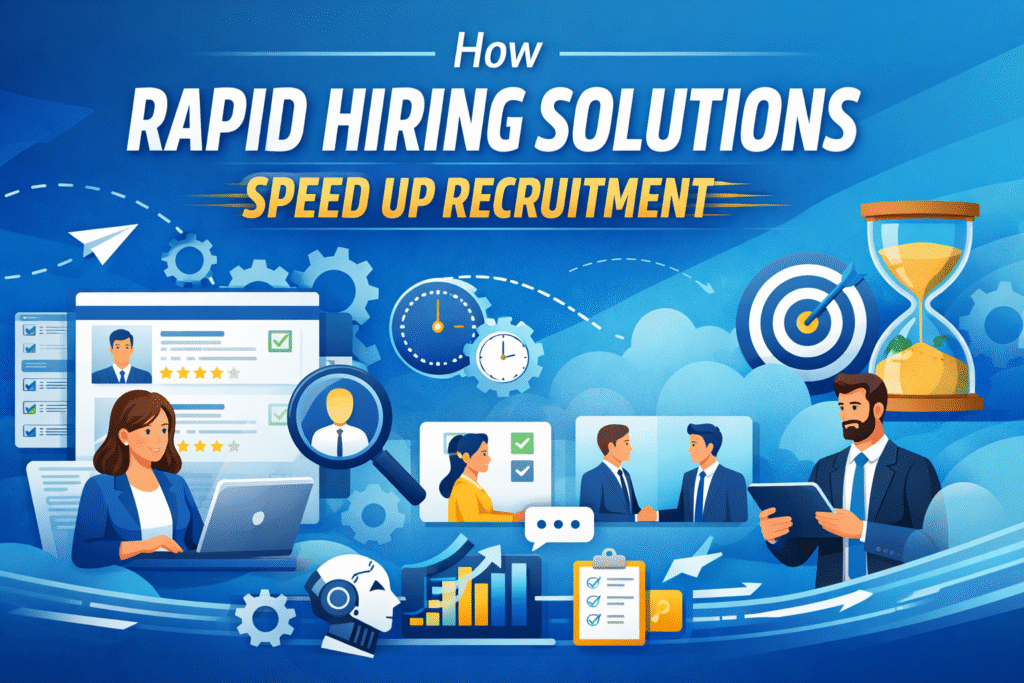
Hiring delays can cost companies time, money, and top talent. Organizations that fail to act quickly often lose qualified candidates to competitors who move faster. This is where rapid hiring solutions come into play. By streamlining recruitment processes, leveraging technology, and improving decision-making speed, businesses can significantly reduce time-to-hire while maintaining quality.
In this blog, we’ll explore how rapid hiring solutions transform traditional recruitment, the benefits they bring, and the strategies companies can adopt to stay ahead in the talent race.
What Are Rapid Hiring Solutions?
Rapid hiring solutions refer to modern recruitment strategies and tools designed to accelerate the hiring process without compromising on candidate quality. These solutions integrate automation, data-driven insights, and simplified workflows to ensure quicker hiring decisions.
Unlike traditional hiring methods, which can take weeks or even months, rapid hiring solutions focus on reducing bottlenecks such as lengthy screening processes, delayed communication, and inefficient interview scheduling.
Why Speed Matters in Recruitment
The Cost of Slow Hiring
A slow hiring process can lead to:
- Loss of top candidates to competitors
- Increased workload for existing employees
- Delayed project timelines
- Higher recruitment costs
Candidates today expect quick responses. A delay of even a few days can lead to disengagement.
Candidate Experience Is Key
Modern job seekers value transparency and efficiency. Companies that adopt rapid hiring solutions often provide a better candidate experience, leading to higher acceptance rates and stronger employer branding.
How Rapid Hiring Solutions Speed Up Recruitment
1. Automation of Repetitive Tasks
One of the biggest advantages of rapid hiring solutions is automation. Tasks such as resume screening, interview scheduling, and follow-ups can be handled by AI-powered tools.
Benefits:
- Reduces manual workload
- Speeds up initial candidate screening
- Minimizes human errors
Automation allows recruiters to focus on strategic decision-making rather than administrative tasks.
2. AI-Powered Candidate Screening
Traditional resume screening is time-consuming and often biased. AI-driven systems can quickly analyze thousands of applications and shortlist the most relevant candidates.
Key Features:
- Keyword matching
- Skill-based filtering
- Predictive analytics
With rapid hiring solutions, recruiters can identify top talent within minutes instead of days.
3. Streamlined Interview Process
Scheduling interviews can often delay hiring. Coordinating between candidates and multiple interviewers can be challenging.
How It Helps:
- Automated scheduling tools
- Virtual interviews
- Pre-recorded video responses
These features eliminate unnecessary delays and make the process more efficient.
4. Centralized Recruitment Platforms
Managing multiple hiring channels can be chaotic. Rapid hiring solutions often include centralized platforms where all recruitment activities are managed in one place.
Advantages:
- Easy tracking of candidates
- Improved collaboration among hiring teams
- Faster decision-making
A unified system ensures no candidate slips through the cracks.
5. Data-Driven Decision Making
Recruitment is no longer based on intuition alone. Data analytics plays a crucial role in improving hiring speed and quality.
Insights Provided:
- Time-to-hire metrics
- Candidate performance predictions
- Source effectiveness
By using rapid hiring solutions, companies can make informed decisions quickly.
Benefits of Rapid Hiring Solutions
Improved Time-to-Hire
The most obvious benefit is reduced hiring time. Companies can fill positions faster, ensuring business continuity.
Better Quality of Hires
Faster doesn’t mean compromising quality. With advanced screening tools, rapid hiring solutions help identify the best candidates efficiently.
Enhanced Candidate Experience
Quick responses and smooth processes create a positive impression on candidates, increasing the likelihood of acceptance.
Cost Efficiency
Reducing hiring time also lowers recruitment costs, including advertising, agency fees, and productivity losses.
Industries That Benefit the Most
While all industries can benefit, some sectors particularly rely on rapid hiring solutions:
IT and Tech
High demand for skilled professionals requires quick hiring to stay competitive.
Healthcare
Urgent staffing needs make speed critical in healthcare recruitment.
Retail and E-commerce
Seasonal hiring demands fast and efficient recruitment processes.
Startups
Startups need agile hiring strategies to scale quickly.
Best Practices for Implementing Rapid Hiring Solutions
Define Clear Hiring Goals
Before adopting any solution, identify what you want to achieve—whether it’s reducing time-to-hire, improving candidate quality, or enhancing experience.
Leverage Technology
Invest in tools that support automation, AI screening, and analytics. Technology is the backbone of effective rapid hiring solutions.
Simplify the Hiring Process
Avoid unnecessary interview rounds or complex procedures. Keep the process straightforward and efficient.
Train Your Recruitment Team
Ensure your HR team is well-equipped to use modern tools and adapt to faster workflows.
Maintain Human Touch
While automation is important, personal interaction remains crucial. Balance technology with human engagement.
Challenges and How to Overcome Them
Risk of Rushed Decisions
Speed can sometimes lead to poor hiring choices. To avoid this:
- Use structured interviews
- Rely on data insights
- Set clear evaluation criteria
Technology Integration Issues
Implementing new systems can be challenging. Choose scalable solutions that integrate easily with existing tools.
Resistance to Change
Employees may resist new processes. Provide proper training and highlight the benefits of rapid hiring solutions.
The Future of Rapid Hiring Solutions
The future of recruitment is undoubtedly fast, intelligent, and technology-driven. Emerging trends include:
- AI-driven interviews
- Chatbots for candidate engagement
- Predictive hiring analytics
- Remote hiring ecosystems
As competition for talent increases, companies that adopt rapid hiring solutions will have a significant advantage.
Conclusion
In a competitive job market, speed is no longer optional—it’s essential. Rapid hiring solutions empower businesses to streamline recruitment, reduce delays, and secure top talent before competitors do. From automation and AI screening to data-driven insights, these solutions are transforming the way organizations hire.
By implementing the right strategies and tools, companies can not only improve efficiency but also enhance candidate experience and overall hiring success. If you’re looking to stay ahead in recruitment, now is the time to embrace rapid hiring solutions and future-proof your hiring process.
Ready to Transform Your Hiring Process?
Partner with Ayat Solutions to implement cutting-edge rapid hiring strategies tailored to your business needs. Accelerate your recruitment, attract top talent, and build a workforce that drives success.